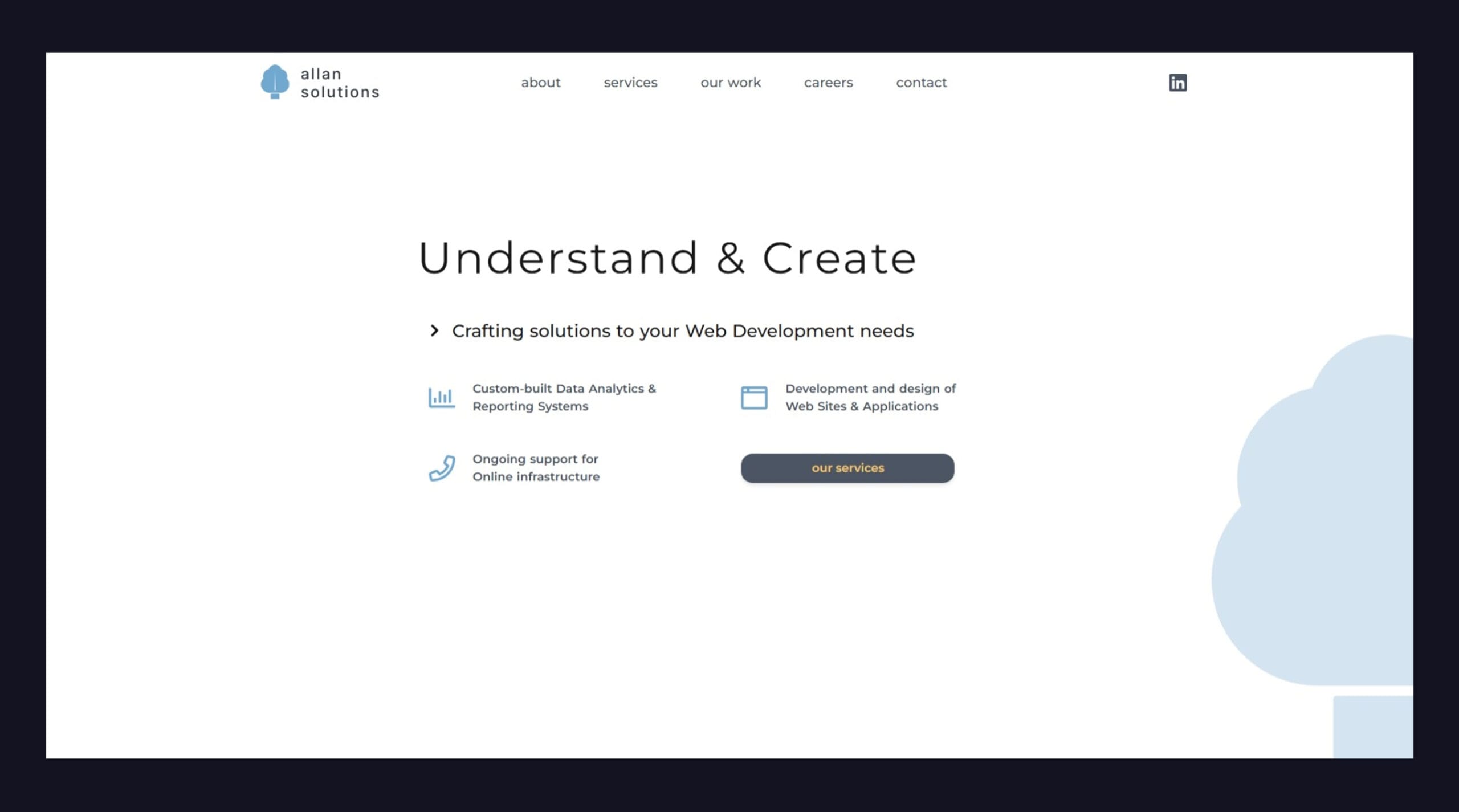
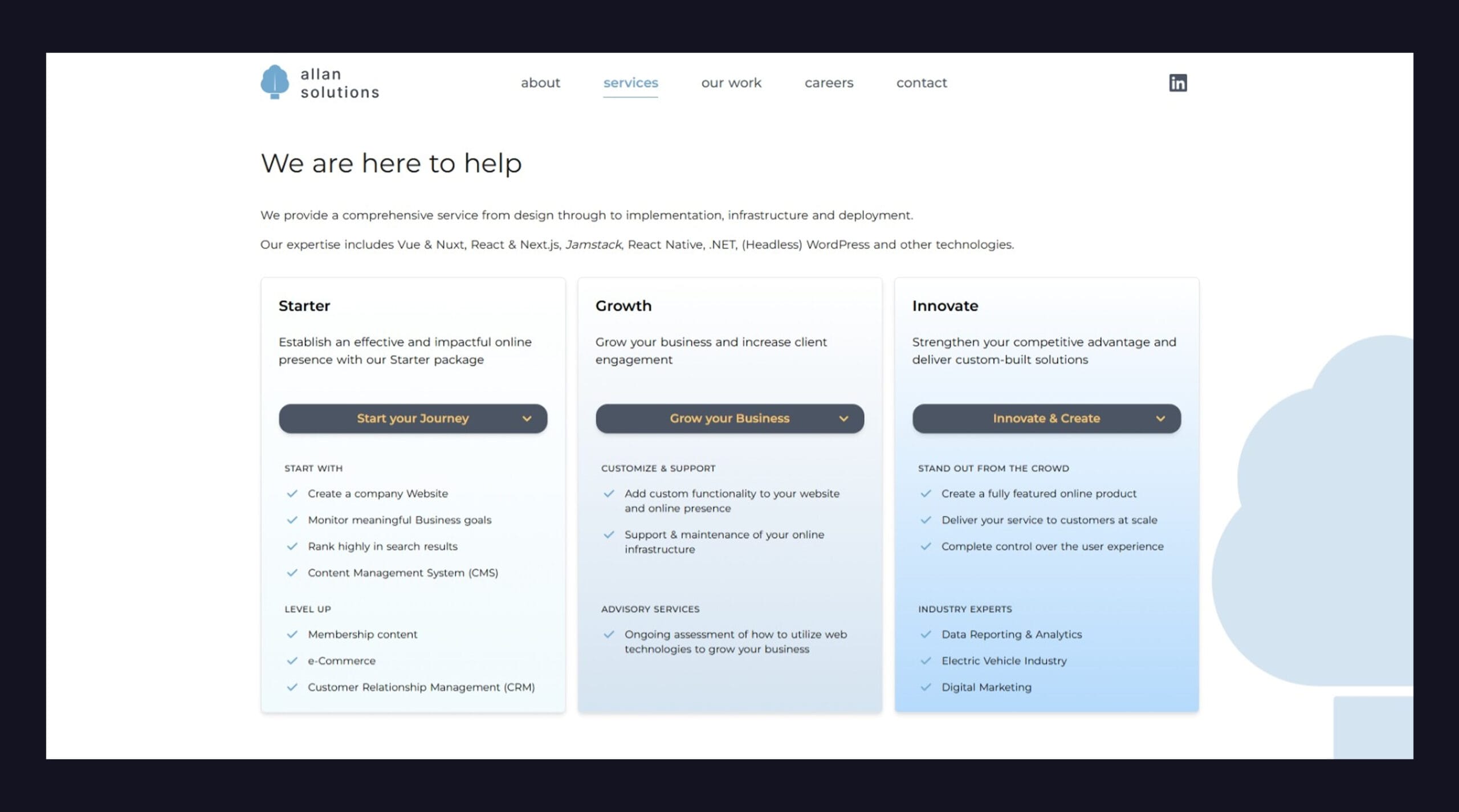
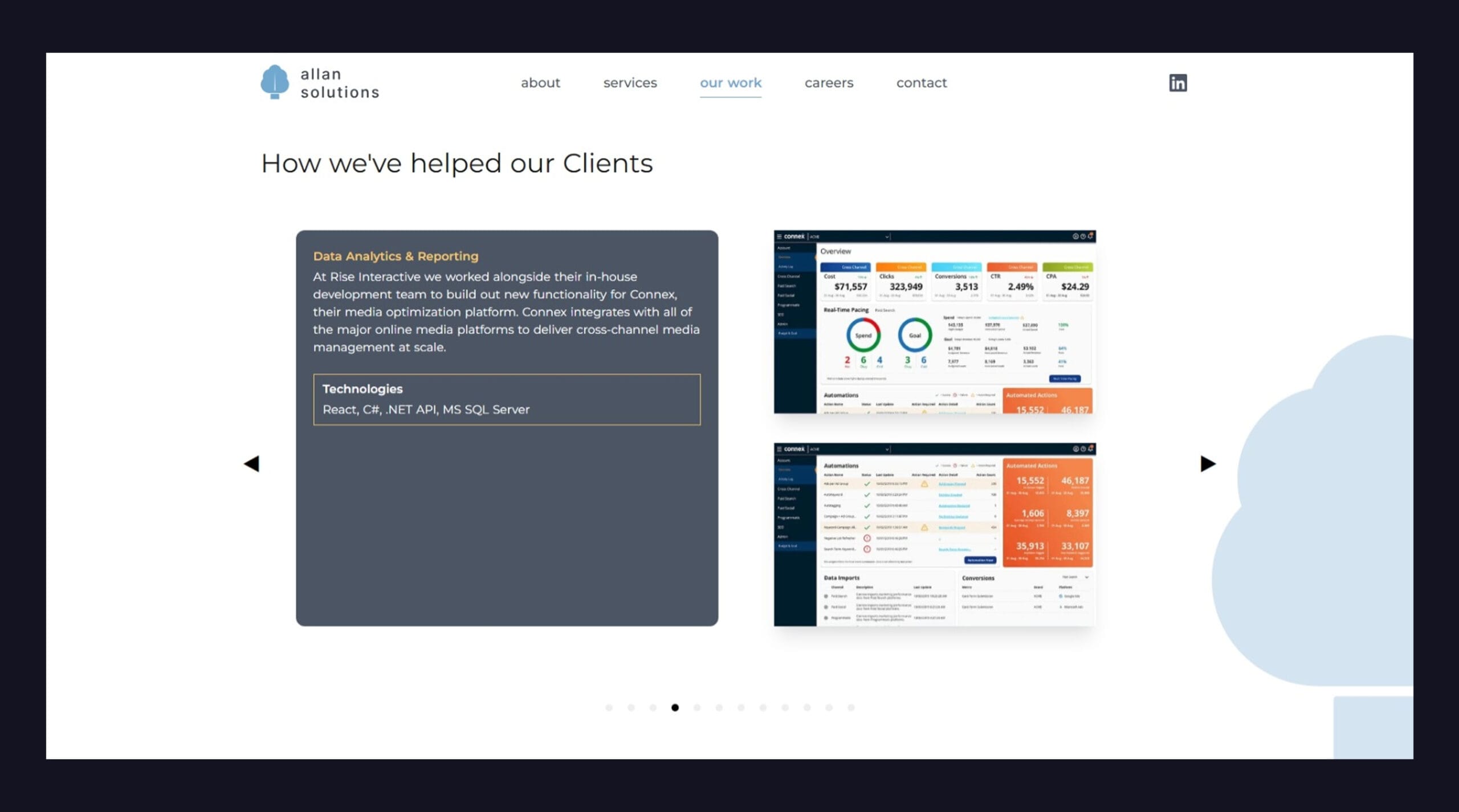
Root Innovation was founded in 2016 as Allan Solutions, initially focused on supporting digital marketing, e-commerce, fintech, and electric vehicle companies – essentially, high-growth startups.
Challenge
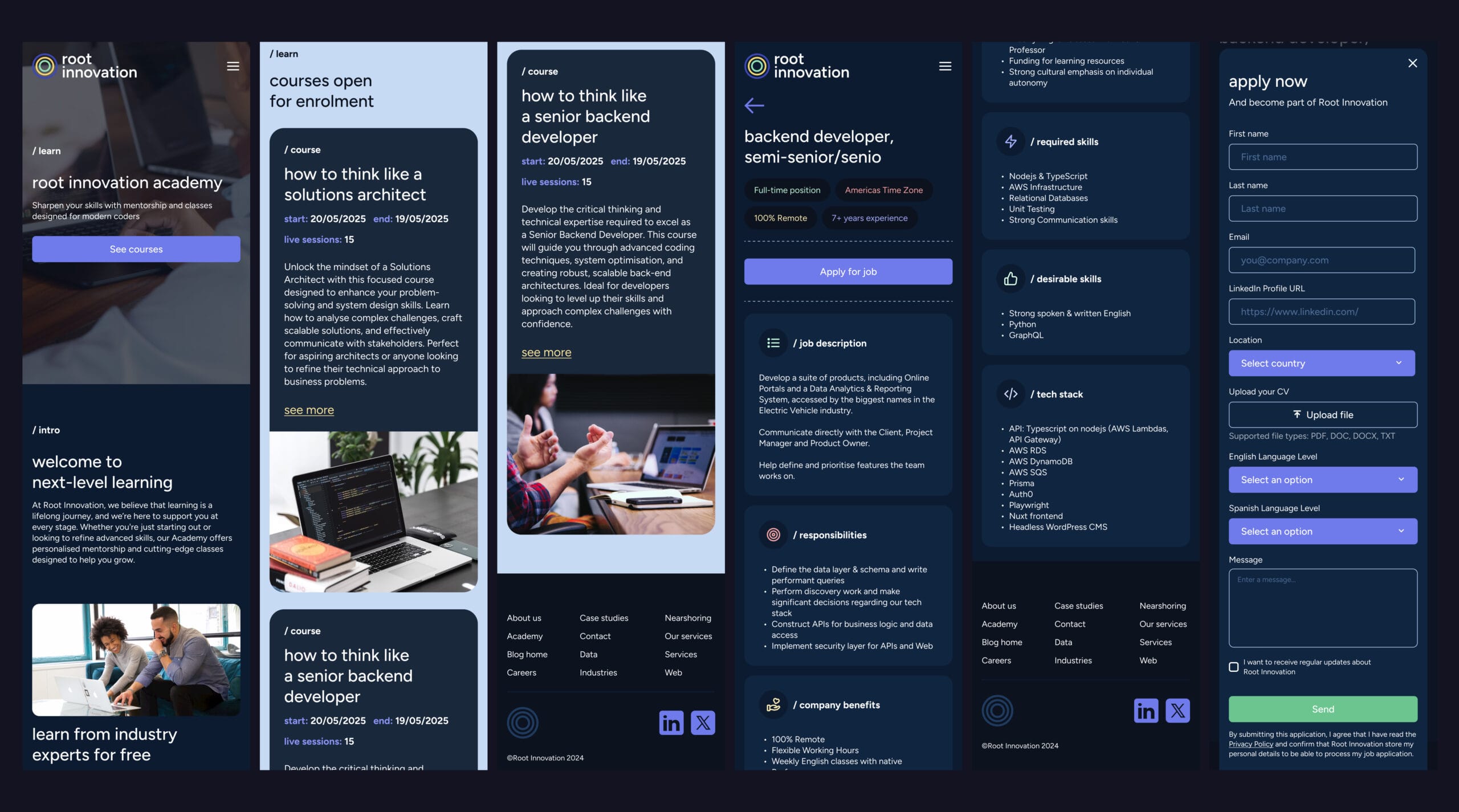
The client undertook a full rebranding requiring comprehensive redesign while facing tight deadlines to deliver mobile-optimized website designs.
Impact & Constrains
The primary pressure stemmed from the need to quickly demonstrate value to stakeholders via mobile website designs.
Teams
Collaborated closely with the stakeholders from Root Innovation and UX designers from the studio.
My role
UX Designer, responsible for translating stakeholders interviews and analytics insights into mobile-optimized flows.
Timeline
November 2024 – January 2025
Time-to-ship (Idea to released product)
4 weeks
Complete stakeholder alignment
From the start
Assessing UX before the mobile design
Stakeholder interviews analysis
Problem statements created out of synthesized research data
Prior to the mobile redesign, Root Innovation’s stakeholder alignment process struggled to consistently deliver clear, prioritized UX requirements, resulting in ongoing design rework and delays.
Before initiating the mobile redesign, Root Innovation’s processes for translating stakeholder interviews and analytics insights into optimized user flows were demonstrably inefficient.
At the outset of the mobile redesign, Root Innovation’s timelines lacked sufficient buffer to accommodate the iterative refinements necessary for truly optimized user flows.
Before the redesign, the existing UX design process at Root Innovation demonstrably failed to effectively translate stakeholder feedback into actionable design changes.
3 areas for improvement
1.
Stakeholder Communication & Alignment
2.
Formalized User Testing
3.
Requirements Validation & Prioritization
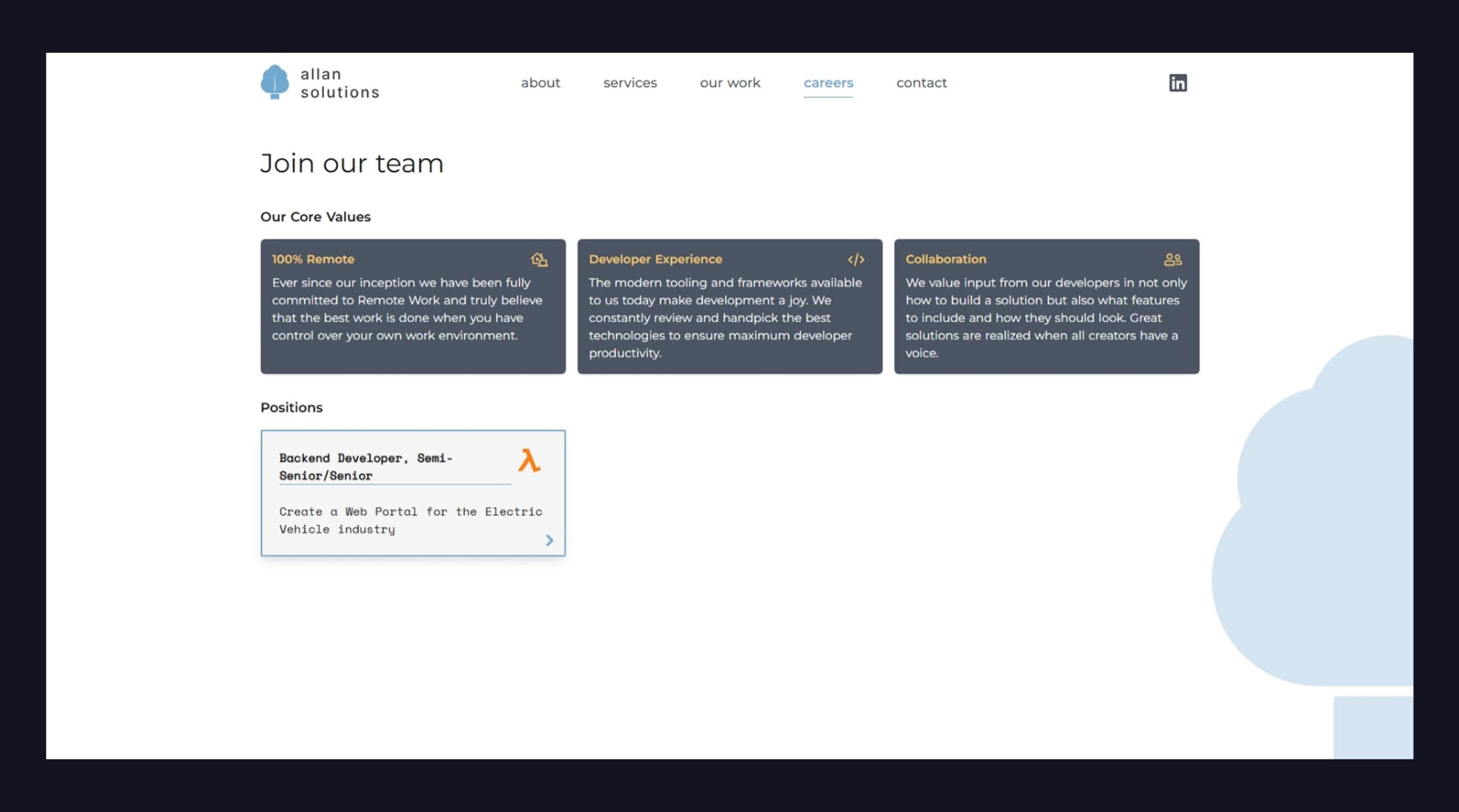
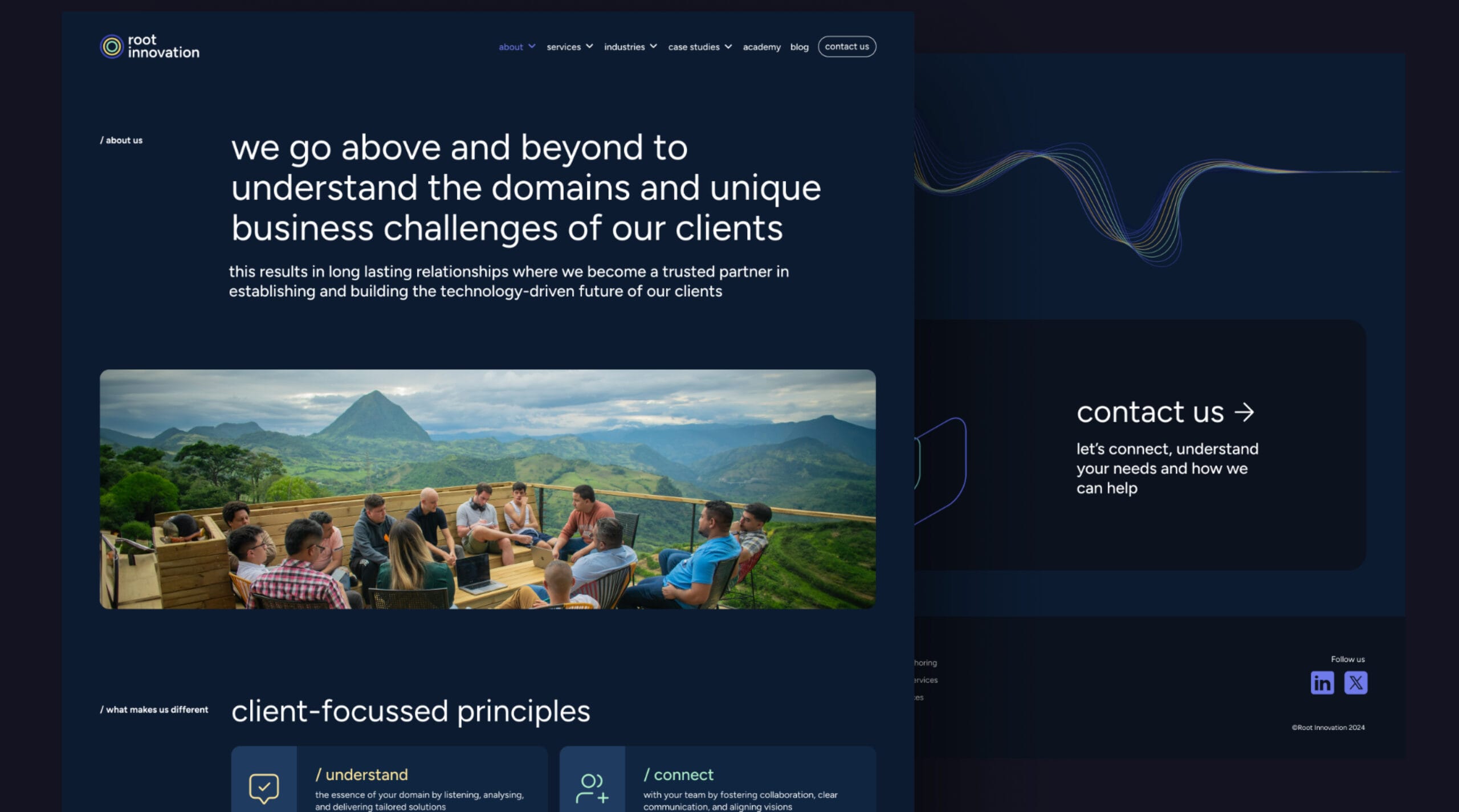
Before Redesign: Desktop Version
Challenge #1
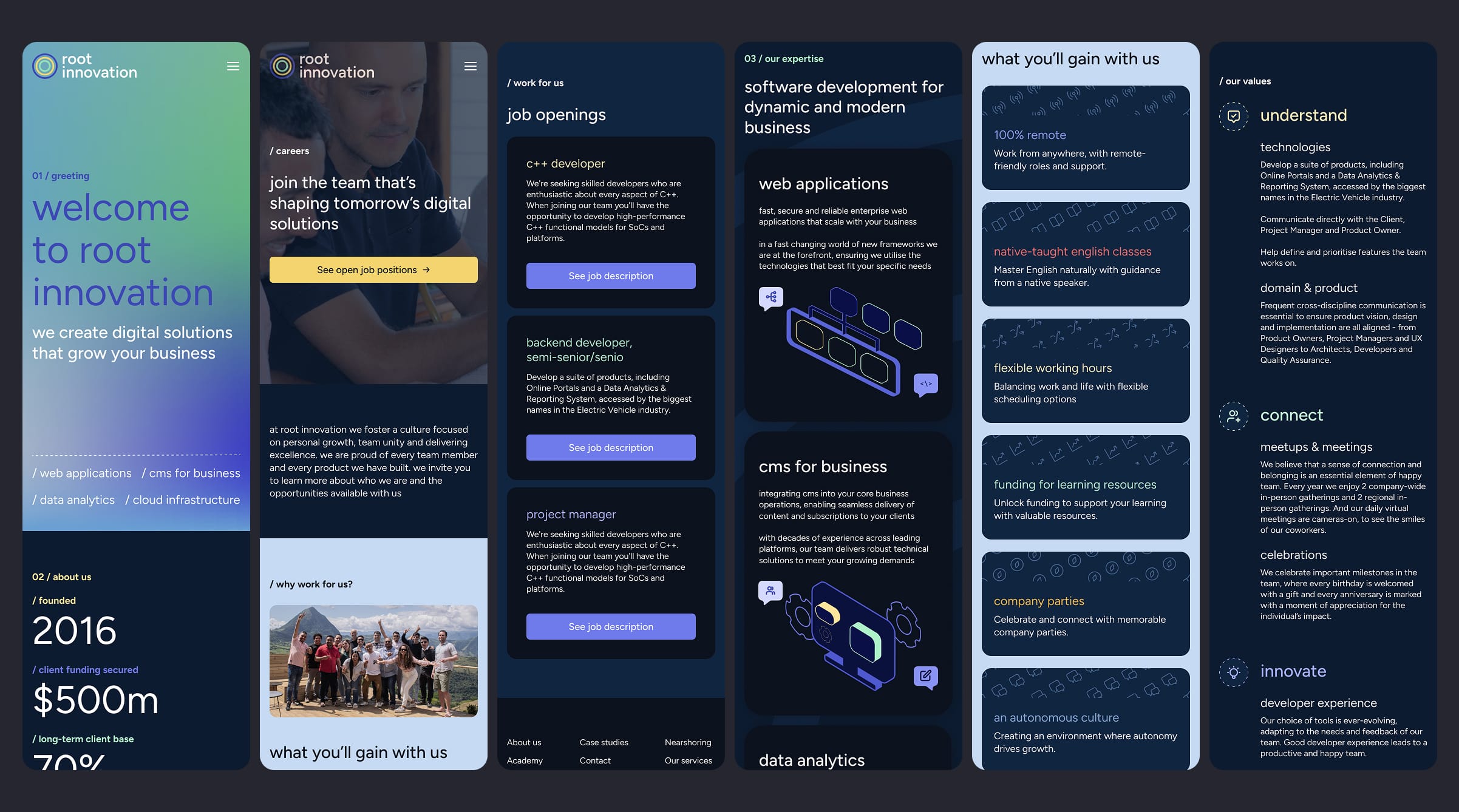
Root Innovation’s processes were struggling to translate stakeholder needs into actionable designs effectively. Prioritization was reactive and driven by immediate pressure, leading to a fragmented and iterative design process with limited focus on long-term usability. As a result, I created mobile designs that incorporated similar patterns and structures from previous designs to minimize confusion regarding new elements.
Image is clickable
Challenge #2
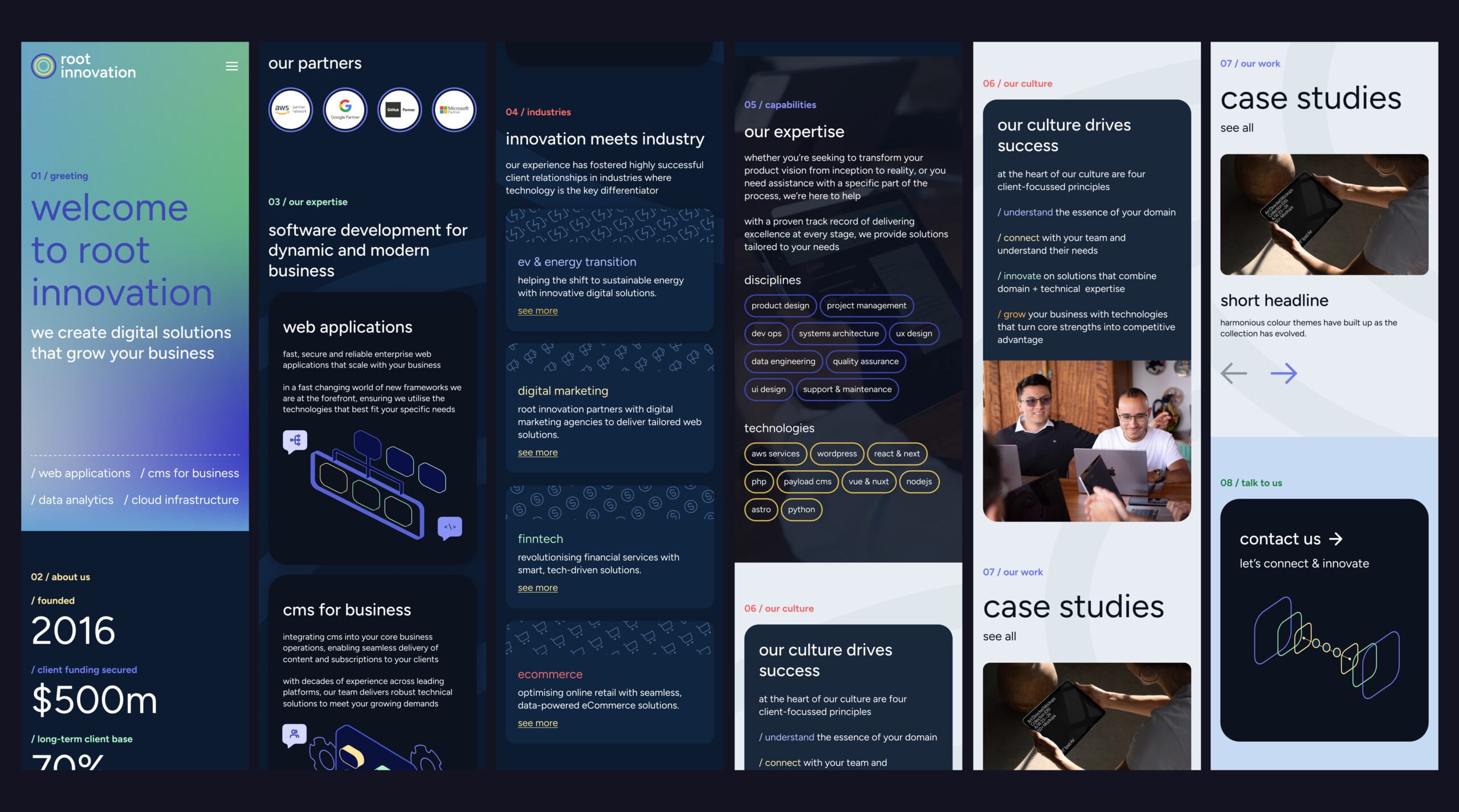
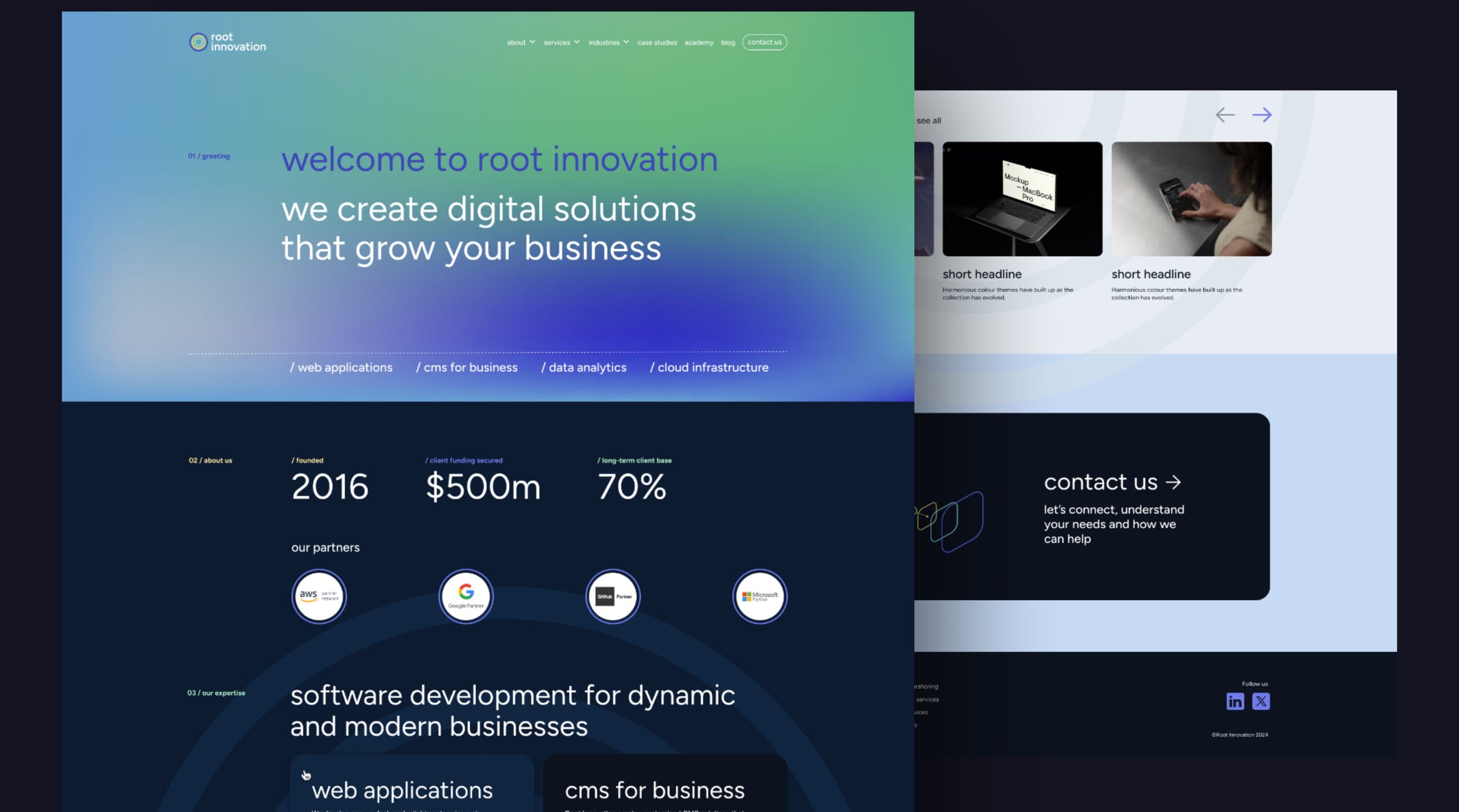
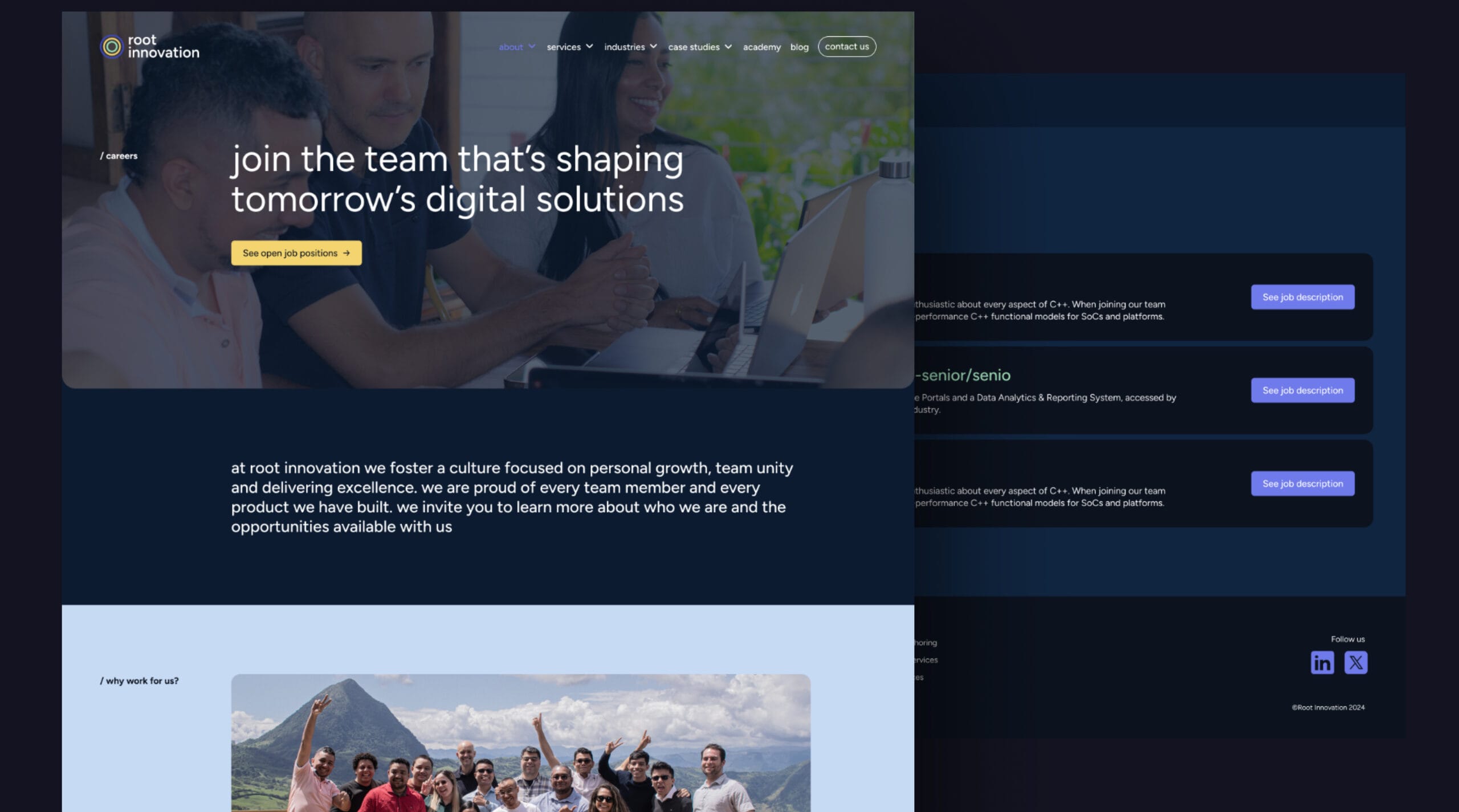
The existing mobile website design was failing to meet the demands of Root Innovation’s diverse client base. I prioritized a unified user experience that integrated a consistent design language across both desktop and mobile versions to simplify navigation and reduce cognitive load.
Image is clickable
After Redesign: Desktop Version
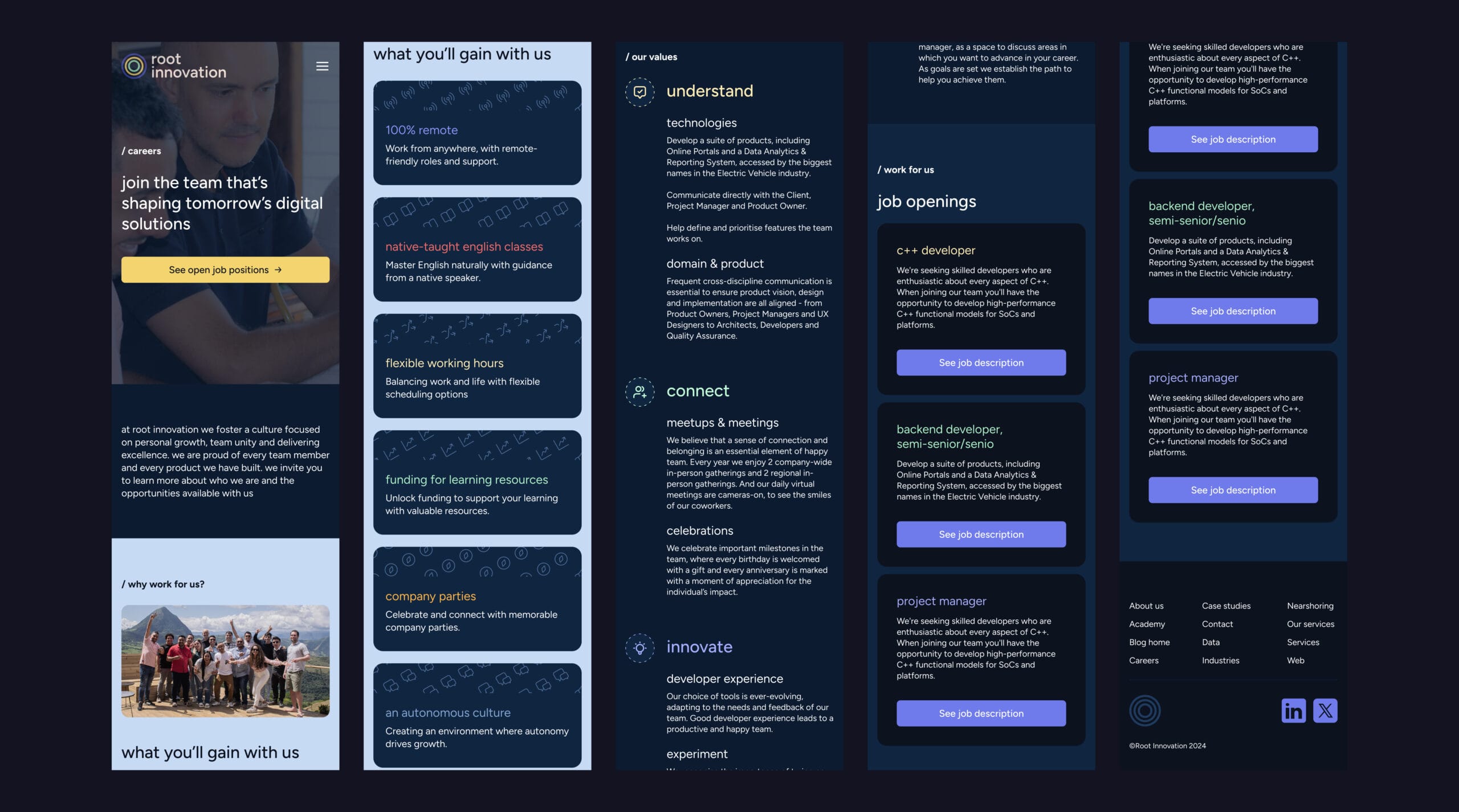
Additional mobile designs
Image is clickable
Results
User satisfaction improved from 3/10 to 9/10 based on post-implementation feedback – demonstrating a significant shift in user sentiment.
Users completed critical tasks without abandoning the site after 1 minute. A 20% decrease compared to the previous design.
But UX is never done…
As the project moves on, so here are the things I would love to improve next:
Immediate Validation & Refinement
Conduct a micro-user test with 3-8 users targeting the conversion rate for the courses on the Academy page.
Establish a Usability Feedback Loop
Implement a system for gathering ongoing user feedback.